


AudioToon: Audiobooks & Dramas
2.819.00 Reviews
App Specs
- Version
- 3.37.02
- Updated On
- License
- Free
- Downloads
- 500,000+
- Developer
- MangaToon HK Limited
- Categories
- Music & Audio
- Platform
- Android
Screenshots
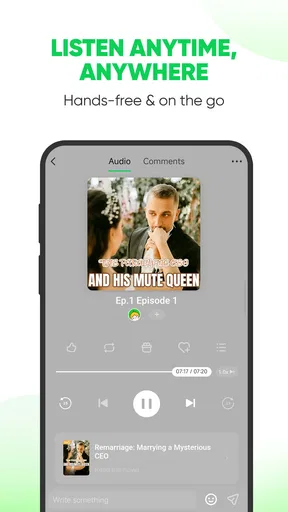
 Analysis by AppCompare
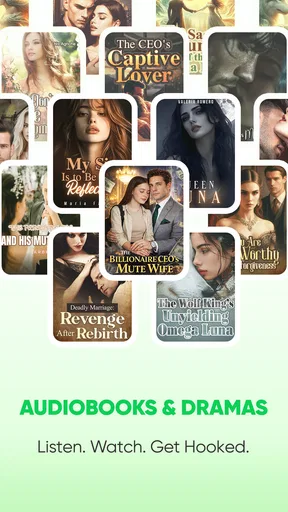
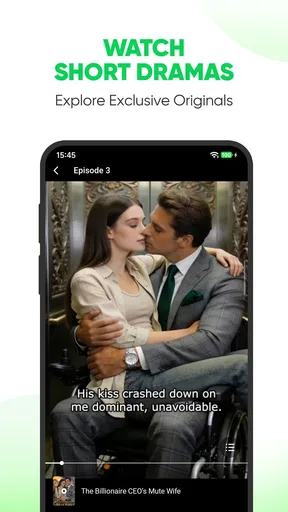
I approached AudioToon: Audiobooks & Dramas as an app for people who want stories to fit into the small gaps of the day. It sits in the Music & Audio category, but it is not mainly a music player. Its focus is spoken entertainment: short dramas, audiobooks, novels, and other story-led listening that works while I am walking, commuting, cooking, or taking a break from a screen.
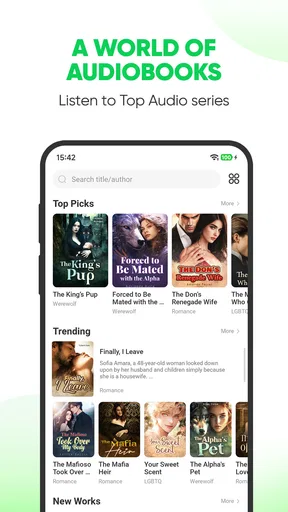
My first impression was that the app makes more sense when I treat it as a discovery service rather than as a replacement for a personal music library. The appeal is the mixture of listening and reading-style storytelling. I can browse for something dramatic when I have only a few minutes, then return to a longer story when I want a more continuous session. That flexibility is the main reason I would recommend trying it, although the modest average rating of 2.8 from around 1.8 thousand ratings suggests that the experience will not suit everyone equally.
What the app feels like when you first open it
The developer behind the app is MangaToon HK Limited, and that background helps explain its story-first personality. AudioToon is built around serialized entertainment and dramatic presentation rather than the calm, reference-like approach of a traditional audiobook library. I would expect the catalog to feel closer to a stream of discoverable stories than to a neatly organized shelf of books I already own.
The app is free to install, which makes the first step easy for a curious listener. It carries a Teen content rating, so I would not hand it to a young child without checking the material personally. That rating is also a useful reminder that the dramatic stories may be aimed at older children, teenagers, or adults rather than at preschool listeners.
AudioToon has passed the point where it is an experimental little download: it has more than 500 thousand installs. That does not guarantee a smooth experience on every phone, but it does mean the basic concept has attracted a substantial audience. The current version is 3.37.02, and the app supports devices running Android 6.0 or later. Anyone using an older Android phone should check compatibility before planning around it.
The most useful expectation to set is this: you are opening a place to find stories, not a universal audio toolbox. If you want local music playback, advanced equalizer controls, podcast subscriptions, or a large collection of familiar commercial albums, a dedicated music or podcast app will probably be a better match. If you enjoy discovering fictional plots and listening in short bursts, AudioToon has a clearer purpose.
Preparing for the first session
After installing, I would begin with a simple goal instead of trying to understand every part of the catalog. Choose one story that matches the time available. For a ten-minute break, a short drama is more practical than starting a long audiobook. For a commute or household chore, a continuing novel may be easier to appreciate because there is enough uninterrupted time to remember the characters and situation.
Worth Reading Before You Choose

Flipboard Shows What News Apps Must Do Beyond the Feed

Switching to Android Auto Means Rethinking Your Driving Routine

Google Calendar Makes a Crowded Week Easier to Manage

Ludo King Makes the Most of the Minutes Between Plans

Baby Panda World Brings Quick Play to Modern Phones, but Its Game Library Feels Busy

ESPN’s Live Game View Makes Following Close Games Easier
This small decision prevents one of the most common frustrations with story apps: spending the entire session browsing and never actually listening. The home screen is likely to tempt you with several directions, but the first meaningful test is whether you can find something engaging quickly. I would give myself a browsing limit, select a title, and start an episode or chapter before judging the whole service.
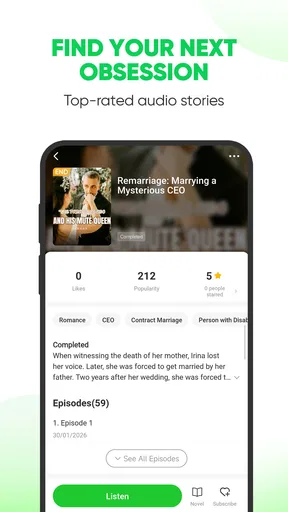
Because the app combines different formats, it helps to notice what kind of item you are opening. A short drama may be designed for quick, episodic listening, while an audiobook or novel can demand more attention over a longer period. Treating every listing as if it were the same can make the catalog feel confusing. The format is part of the choice, not just a label beneath the title.
I would also keep expectations realistic about free access. The app itself costs nothing, but in-app purchases range from $0.99 to $99.99 per item. That is a wide range, so I would avoid buying anything during the first session. First find out whether the narration style, pacing, story genre, and general navigation work for you. A free installation is a good invitation to test the experience, not a reason to spend immediately.
Finding the first story worth finishing
My recommended first action is to select a story based on its premise and listen long enough to decide whether the presentation works for you. Do not choose only because an image looks attractive or because a title appears prominently. A dramatic cover can promise one mood while the narration delivers another. The real test is whether the opening establishes enough interest for you to continue without constantly checking the screen.
For a first-time user, the best success is not completing a full book. It is finding one story you would willingly return to tomorrow. That gives the app a fair test and creates a practical routine. I would start during a repeatable activity, such as a morning walk or evening tidy-up, then stop at a natural point. If I remember the plot later and want to know what happens next, the app has already proved its basic value.
Short dramas are especially useful for this first test because they can provide a quicker sense of the app’s personality. They may suit someone who wants a complete emotional beat in a limited window, while longer audiobooks are better for listeners who enjoy settling into a sustained narrative. I would use the short format to learn whether AudioToon’s style appeals to me before committing attention to a longer series.
A practical tip is to keep the phone available during the first few minutes. Even if your final goal is screen-free listening, the opening session is when you may need to recognize the title, understand where the story is in its sequence, or decide whether you have selected the format you intended. Once you know the route to your current story, later sessions can become much less dependent on browsing.
Another useful habit is to judge the app in two different situations. Try it once with focused attention and once while doing a routine task. Some story apps work well when I watch or read along but become difficult to follow when my attention is divided. AudioToon’s value depends heavily on whether the spoken storytelling remains understandable when the screen is no longer the center of my attention.
Where new users may become confused
The mixture of audiobooks, novels, and short dramas is attractive, but it can also blur the difference between listening and reading. When I see several story formats together, I need to pause and confirm what I am selecting. A person looking specifically for narrated content may be disappointed if they assume every novel listing is an audiobook. The safest approach is to identify the format before investing time in the title.
Another possible source of friction is the relationship between free discovery and paid items. Since the app is free but offers purchases, I would pay attention to any item that appears to require a purchase before continuing. I would not assume that every story follows the same access pattern. This is one of the reasons I recommend testing several free listening moments before deciding whether the catalog deserves payment.
The purchase range also changes how I would use the service. A small one-off payment may feel reasonable for a story that has already earned my interest, while a much larger item deserves more caution. I would compare the amount with how often I expect to listen and whether I am comfortable committing to that particular story. The important point is to make the decision after experiencing the app, not during the excitement of the first browse.
The Teen rating is another detail worth keeping in mind when sharing a device or recommending a title to someone younger. It does not tell me that every story has the same tone, so I would still use personal judgment about themes and intensity. For family use, I would choose content together rather than letting the rating act as the only filter.
Some listeners may also mistake the app for a conventional audiobook platform. The difference is in the browsing experience and the mix of formats. A traditional audiobook service may be preferable if you already know which authors or publishers you want, need a carefully managed personal library, or prefer a predictable book-by-book structure. AudioToon is more appealing when discovery, serialized drama, and variety matter more than strict catalog organization.
Making it useful in everyday life
Imagine that I have a thirty-minute bus ride. Instead of opening a social feed and losing the entire journey to random scrolling, I could choose a continuing drama before leaving home and let the ride become a regular listening slot. If the story is easy to follow, the app turns an otherwise empty part of the day into a small routine. If I need to concentrate on announcements or conversation, a short episode may be safer than beginning a complicated plot.
For cooking, I would choose something with clear narrative momentum rather than a story that requires constant visual checking. For a quiet evening, I might prefer an audiobook or novel with a slower pace. These choices sound simple, but they are important because the same title can feel excellent in one setting and frustrating in another. AudioToon works best when I match the content format to my attention level.
A less obvious trade-off is that story apps can encourage unfinished collections. The ease of sampling one drama after another may leave me with many beginnings and few completed stories. I would avoid that by keeping one main story and one backup choice, rather than opening every promising title. This makes it easier to remember characters and gives the app a stronger chance to become part of a routine instead of another source of digital clutter.
I would also use the app as a low-pressure way to explore genres I would not buy immediately in book form. A dramatic premise can be enough to start a sample, and the free entry point reduces the risk of choosing badly. Still, sampling is not the same as owning a complete reading collection. Someone who wants permanent control over purchased files, a broad choice of narrators, or detailed book-management tools may be happier elsewhere.
For language learners, spoken stories can be tempting because context helps make unfamiliar phrases memorable. I would treat AudioToon as supplementary listening rather than as a structured language course. The story may expose me to natural rhythm and repeated expressions, but it is not a substitute for lessons, transcripts, or carefully graded exercises. Its strength is motivation through plot, not systematic instruction.
How it compares with familiar alternatives
Compared with a music streaming app, AudioToon is much better suited to listeners who want a plot instead of a playlist. Music can fill a room without demanding that I remember names and events, while a drama asks me to follow what is happening. That makes AudioToon more rewarding for narrative fans but less useful when I simply want background sound.
Compared with a podcast app, it offers a more fictional and story-centered destination. Podcasts are often organized around shows, hosts, news, conversation, or commentary, whereas AudioToon’s identity is tied to dramas, audiobooks, and novels. I would choose a podcast service for current affairs or interviews and turn to AudioToon when I want an invented world or serialized plot.
Compared with a conventional audiobook store, AudioToon feels more exploratory. That is a strength when I do not know what I want, especially if short dramas help me discover a style quickly. It is a weakness when I have a specific title in mind and want certainty about availability, ownership, narration, or long-term library management. The better choice depends on whether discovery or control is more important to me.
Compared with reading an ebook, listening here is more convenient during movement and chores, but less flexible when I need to reread a sentence, scan ahead, or take notes. I would not replace every reading habit with audio. Instead, I would use AudioToon for situations where my hands and eyes are busy, then return to text when I need precision or deeper study.
Who should try it and who should pass
I think the app is worth trying for people who enjoy serialized fiction, want a free way to sample spoken stories, or need entertainment that can accompany ordinary tasks. It is also a sensible option for someone who does not want to choose a full audiobook immediately and would rather explore shorter dramatic formats first.
I would be more cautious about recommending it to listeners who are primarily looking for music, serious educational audio, a tightly curated audiobook library, or complete control over a personal collection. The app’s variety may feel distracting to someone who prefers one clear format. The in-app purchase range is another reason budget-conscious users should explore first and spend later, if at all.
The rating of 2.8 is not a reason to dismiss the app automatically, but I would take it as a prompt to test it on my own device and with my own listening habits. Audio apps can feel very different depending on the stories available, the phone being used, and how much browsing a person tolerates. I would not assume that a popular install count guarantees that my experience will be smooth.
My next-step routine after the first day
After finding a story I enjoy, I would make the next step deliberately simple: return to that title at the same time the following day. If I keep searching instead, I would ask whether the problem is the story choice or the app itself. Trying one different format can answer that question. A short drama may reveal that I like the service but not long-form listening, while an audiobook may show that I need more time before judging the catalog.
I would also review my spending boundary before touching paid content. AudioToon is free to start, but the presence of purchases means the app should be used with the same care as any entertainment marketplace. I would only pay after confirming that I enjoy the story, understand what I am receiving, and expect to return to it. That approach keeps the free discovery aspect useful without turning curiosity into an impulsive purchase.
Overall, I see AudioToon as a focused option for story lovers who want short dramas and spoken fiction woven into daily routines. It is not the universal answer for every kind of audio, and its mixed rating makes a personal trial sensible. Still, the combination of free entry, varied narrative formats, and a clear first-use path gives it a fair chance to become a pleasant companion for commutes, chores, and short breaks. My advice is to begin with one short story, test it in a real everyday situation, and spend only after the listening experience has earned your confidence.
Pros
- Large catalog of audiobooks
- dramas
- and serialized audio stories
- Useful playback controls make listening comfortable during commutes or chores
- Regularly updated content gives frequent listeners new stories to discover
- Supports immersive
- voice-acted storytelling beyond standard audiobook narration
- Personalized recommendations can help users find titles matching their interests
Cons
- Some popular titles or episodes may require a paid subscription
- Audio quality and narration can vary between different productions
- Offline listening may be limited depending on the title or membership plan
- The catalog may focus heavily on specific genres or regional content
- Long episodes can consume considerable mobile data when streamed
FAQs for AudioToon: Audiobooks & Dramas
What is AudioToon: Audiobooks & Dramas?
AudioToon: Audiobooks & Dramas is an entertainment app focused on spoken-audio content, including audiobooks, serialized dramas, stories, and other narrative programs. Its catalog is designed for listening rather than reading, making it suitable for commutes, relaxing at home, or enjoying fiction while doing other tasks. The available titles, genres, languages, and episode formats may vary by region and app version.
Is AudioToon: Audiobooks & Dramas free to use?
The app can generally be downloaded without an upfront purchase, but access to every audiobook, drama, chapter, or premium feature may depend on the subscription and payment options offered inside the application. Some content may be available for free, while other titles can require credits, membership, advertisements, or individual purchases. Check the in-app pricing and renewal terms before subscribing.
Does AudioToon support offline listening?
Offline listening depends on the title and the features enabled in your version of AudioToon. If downloads are available, you can save supported episodes or books while connected to Wi-Fi and listen later without using mobile data. Downloaded files may remain accessible only inside the app and can be subject to account, subscription, storage, or licensing restrictions.
What type of content can I find in the app?
AudioToon is mainly intended for listeners who enjoy narrated books and episodic audio dramas. Depending on the current catalog, you may find romance, mystery, fantasy, suspense, fiction, relationship stories, and other serialized productions. Because content can change over time and availability may differ by country, prospective users should review the catalog and content ratings before downloading.
Is AudioToon suitable for children and does it require an account?
AudioToon may contain mature themes, intense situations, romance, violence, or language that is not appropriate for younger listeners, so parents should review the platform’s age rating and individual titles. An account may be needed to synchronize progress, save favorites, manage subscriptions, or access premium content. Review the privacy policy and requested permissions before creating an account.


